
Which Cordless Tools Do You Actually Need for Missouri Home Projects?
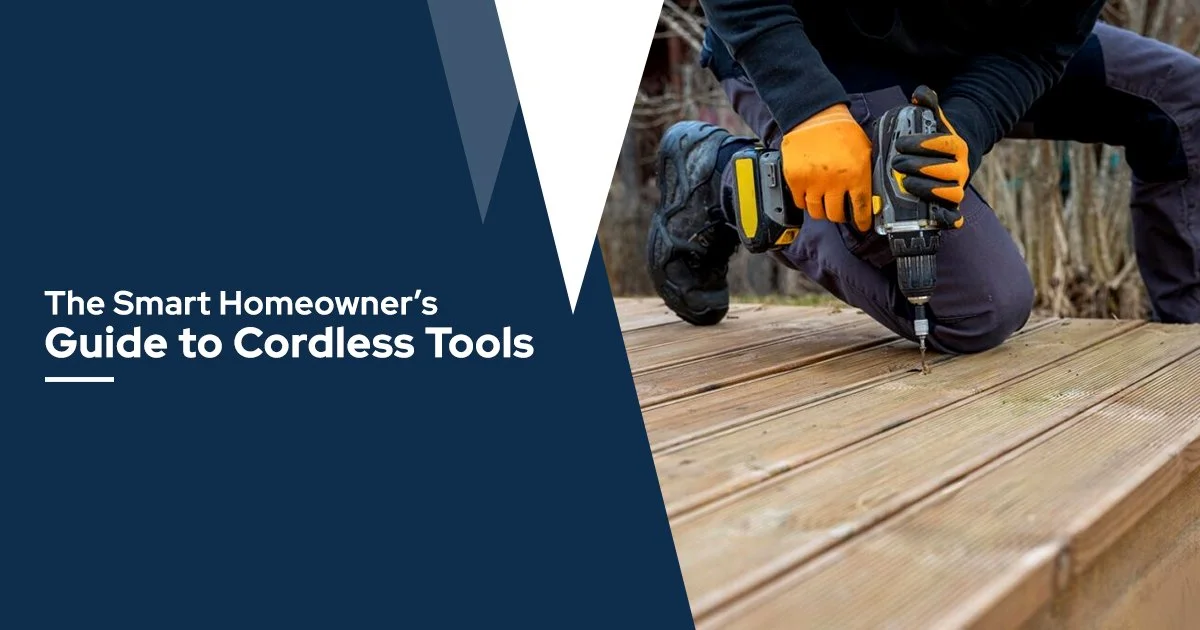
The tool aisle is designed to separate you from your money.
You walk in for a drill and walk out with a drill, an impact driver, a circular saw, two extra batteries, a carrying bag, and a vague memory of putting a reciprocating saw in the cart before putting it back. You've spent $400 and you're not entirely sure why.
We've watched this happen at Hall Brothers Lumber for 87 years. And the homeowners who have the most satisfying project outcomes aren't the ones with the most tools — they're the ones who bought the right tools for what they were actually building.
This guide is for the Franklin County homeowner planning a real project this season: a deck, a fence, a set of cabinets, general repairs around the house. We'll tell you exactly which cordless tools earn their place in a Missouri garage, which ones you might not need, and how to think about battery platforms so you're not buying chargers for the rest of your life.
Why Do Battery Platforms Matter Before You Buy a Single Tool?
Every cordless tool brand runs on a proprietary battery — which means the first tool you buy locks you into a battery system for years. Choosing a platform first, then filling it with tools, is the decision that saves the most money long-term.
Here's the math most people don't think through: a drill costs $99 as a bare tool. As a kit with one battery and charger, it costs $149. The battery itself, bought separately, costs $60–$80. If you buy three tools from three different brands, you now have three chargers and three battery systems. If you buy three tools from one brand, you have one charger and batteries that work across all three.
The most popular platforms for DIY homeowners are the major 18V–20V systems from established tool brands. Each platform has dozens of tools built around the same battery. Once you own two or three batteries from a platform, every new tool you add to it is cheaper because you're only buying the bare tool — not another battery and charger.
What we tell customers at Hall Brothers: Before buying anything, decide on your platform. Pick based on which brand has the tools you'll actually need over the next several years. Then buy your first kit — typically a drill/driver combo — and build from there.
If you're not ready to commit, start with one quality kit and add to it. The worst outcome is owning two half-populated platforms with incompatible batteries.
Our tools department carries tool options we've vetted for Missouri homeowners — come in and we'll help you sort through what makes sense for your project and budget before you commit to a platform.
What Are the Truly Essential Cordless Tools for Missouri Home Projects?
For the projects most Union and Franklin County homeowners tackle — decks, fences, cabinets, trim work, general repairs — four tools cover 90% of what you need: a drill/driver, an impact driver, a circular saw, and a jigsaw. Everything else is situational.
Let's go through each honestly:
The Drill/Driver — Non-Negotiable
Every homeowner needs a quality 18V or 20V drill/driver. This is the one tool that earns its keep on every single project.
Drilling pilot holes before driving screws — prevents wood splitting in decking and fence boards. Mixing thin-set or paint. Driving smaller screws where an impact driver would be overkill. Installing cabinet hardware. There is no project category where you don't need a drill.
What to look for: A brushless motor if the budget allows — brushless motors run cooler, last longer, and extract more runtime from each battery charge. At minimum, variable speed with a clutch setting so you can control depth when driving screws into finished material.
Missouri-specific note: If you're building a deck or installing fence posts in Franklin County's clay soil, you'll likely be drilling into pressure-treated lumber. A quality 18V drill handles this well. A cheap 12V will frustrate you before the second post is done.
The Impact Driver — Easier Than You Think to Justify
An impact driver looks like a drill but works differently. Instead of continuous rotation, it delivers rotational bursts — which drives screws faster and with far less wrist strain, especially into hardwood or thick lumber.
If your project involves more than 50 screws — any deck, any fence, any cabinet installation — an impact driver pays for itself in your first hour. Driving 200 deck screws by hand or with a standard drill is genuinely tiring. Driving 200 deck screws with an impact driver is not.
Important distinction: Impact drivers are for driving screws, not for drilling holes. They're too aggressive for pilot holes and will strip small screws in thin material. The workflow is: drill pilot holes with the drill, drive screws with the impact driver. This is why the two are almost always sold as a combo kit — they're meant to work together.
The Circular Saw — Required for Any Cutting Project
If your project involves cutting lumber, plywood, decking boards, or any sheet material, a cordless circular saw is necessary.
A 7¼-inch blade is the standard for most construction lumber — it cuts through 2×6 dimensional lumber at 90 degrees in a single pass. For decking projects specifically, a quality circular saw with a sharp blade makes the difference between straight, clean cuts and boards that look like they were cut by someone who was in a hurry.
One thing most people don't plan for: blade quality matters as much as saw quality. A mid-range saw with a high-quality blade outperforms a premium saw with a cheap blade. Budget for replacement blades before your project starts — especially if you're cutting pressure-treated lumber, which dulls blades faster than standard pine.
Our lumber department can advise on the right blade spec for the material you're cutting. It's worth asking before you buy.
The Jigsaw — More Useful Than It Gets Credit For
A jigsaw makes curved cuts, notch cuts around posts, and any cut where a circular saw can't start from an edge. For deck builders: cutting decking boards around obstacles, notching boards around post bases, making the cutouts for stair stringers. For fence builders: cutting pickets to follow a slope grade.
A jigsaw also handles cuts in finished material — trimming a door for carpet clearance, cutting an opening in drywall for an outlet box — where a circular saw would be destructive.
It's the fourth tool most homeowners need, and the one they most commonly forget to put in the budget. Add it before you start the project, not midway through when you discover you need it.
What Tools Do You Need Specifically for Building a Deck in Missouri?
A deck build in Franklin County requires at minimum a drill/driver, impact driver, circular saw, and a speed square. A jigsaw for notch cuts, a post hole digger or auger for footings, and a level make the job significantly more manageable.
Deck projects are the most common major DIY undertaking we see customers prepare for at Hall Brothers.
Here's the tool list that actually covers the job:
Cutting: Circular saw for decking boards and framing lumber. Jigsaw for any notch or curved cut. A miter saw (corded or a rental) for consistent 45-degree angle cuts on stair risings and trim — this is optional but produces better results than trying to angle-cut with a circular saw consistently.
Fastening: Impact driver for driving deck screws into decking boards — this is where the impact driver earns everything. Drill for pilot holes in end grain, pre-drilling near board edges, and hardware installation.
Layout and measuring: Speed square for marking cut lines and confirming square corners. Chalk line for snapping long straight lines across decking boards. 4-foot level for checking post plumb and joist level. A tape measure that actually locks — cheap tape measures with weak locks are a frustrating project companion.
Foundation: Post hole digger or rented power auger for footings. Franklin County soil runs clay-heavy which means hand-digging footings is miserable work. For any deck with more than four footings, renting a power auger for a half-day saves three hours of labor.
Tip from our experience: The most common tool-related mistake on deck projects is driving screws without pilot holes near board ends. It splits pressure-treated lumber and creates structural weaknesses that are invisible until years later. The extra two minutes per board for a pilot hole is worth every second.
Our decking and railing page covers material choices — composite vs wood vs PVC — and our hardware section stocks the fasteners, post caps, joist hangers, and structural hardware that a proper deck build requires.
What Tools Do You Need for Fence Installation in Franklin County?
A fence project needs a drill/driver, circular saw, post level, and a string line for alignment. A post driver or rented auger for posts, and a miter saw if you want clean consistent picket tops.
Fence work is physically demanding even with the right tools. Here's how to tool up correctly:
Posts: A manual post driver handles standard fence posts in most soil conditions — if your soil cooperates. Franklin County clay can make hand-driving posts miserable in summer. Renting a gas-powered post driver or auger for a day costs $60–$100 and saves hours. Worth it for any fence longer than 40 linear feet.
Cutting: Circular saw for cutting posts to height and rails to length. If your fence line follows a slope, you'll be cutting pickets at consistent angles to follow the grade — a miter saw makes this dramatically easier and more precise than a circular saw.
Fastening: Impact driver for driving screws or nails through fence rails into posts. A palm nailer or a corded framing nailer (rental) speeds up picket attachment significantly for large fences.
Layout: String line and line level to establish a consistent fence line. Nothing reveals a crooked fence like the finished product — getting the string line right before the first post goes in saves significant frustration.
Tip: Pre-drill pilot holes in fence pickets near the top and bottom edges before fastening. Splits in pickets from screws driven without pilots look bad and compromise weathering performance.
How Many Batteries Do You Actually Need?
Two batteries gets you through a typical weekend project day without idle time. Three batteries is the right number for larger projects — a full deck or fence installation — where you need to keep working while one charges.
The rotation works like this: start with two fully charged batteries. When battery one depletes, put it on the charger and switch to battery two. By the time battery two depletes, battery one is charged or close to it. You're almost never waiting.
Where this breaks down: projects that use a lot of power — driving hundreds of screws into dense pressure-treated lumber, cutting many boards — burn through batteries faster than expected. A high-quality 5.0Ah battery handles more work per charge than a 2.0Ah battery included in a basic kit.
Practical guidance by project:
For a general repair day — fixing a fence section, hanging a door, installing trim — two batteries is plenty.
For a full deck build across multiple weekends — three batteries eliminates downtime and gives you a backup if one starts showing reduced capacity.
For large-scale projects with multiple tools running simultaneously — have one battery per active tool plus two spares minimum.
Battery care for Missouri summers: Heat is the enemy of battery life. Don't leave batteries in a truck bed or car in a Missouri July. Don't charge them in direct sun. Store them in a cool, dry location between project days. A battery that's been cooked in a hot car may charge fully but deliver noticeably less runtime — the cells are damaged even if the battery indicator looks fine.
What Tools Can Most Missouri Homeowners Skip — At Least for Now?
A reciprocating saw, oscillating multi-tool, and rotary tool are genuinely useful for specific situations but aren't needed for the majority of common Missouri home projects. Buy them when you have a project that requires them — not in advance.
Reciprocating saw: Excellent for demolition — cutting through existing framing, pruning branches, cutting out old subfloor. Overkill for most new construction projects. If you're removing an old deck, adding one to your toolkit makes sense. If you're building new, it sits unused.
Oscillating multi-tool: The specialty knife of power tools — incredibly useful for a narrow set of tasks (cutting a sliver off a door jamb for new flooring, scraping old caulk, flush-cutting fasteners). If your project specifically includes one of these tasks, it earns its keep. Otherwise it's a $100 solution looking for a problem.
12V compact tools: Great for light work — driving small screws, drilling through thin material, precision work. If you already have an 18V/20V system, a 12V adds a different battery platform for limited additional benefit. Most Missouri homeowners doing structural work — decks, fences, framing — get more value from a second 18V battery than from a 12V tool.
The same logic applies to many specialty tools: buy for specific projects, not for general preparedness. The garage full of half-used tools is a byproduct of buying in advance of need rather than in response to it.
What Does an Honest Starter Tool Kit Look Like for a Missouri Homeowner?
A drill/driver and impact driver combo kit from a reputable 18V/20V platform, plus a circular saw as a bare tool on the same platform, plus two quality 5.0Ah batteries and a charger — this covers 80% of what most Franklin County homeowners build in a year.
Starter kit — covers deck repairs, fence work, cabinet installation, general repairs:
- Drill/driver + impact driver combo kit (includes 2 batteries and charger)
- Circular saw — bare tool (same platform, uses the combo kit batteries)
- Speed square + chalk line + good tape measure
- Drill bit set and driver bit set
- Spare circular saw blade matched to your primary material
Add as needed:
- Jigsaw (same platform, bare tool) — when your first curved cut comes up
- Third battery — when you start a large project and notice you're waiting on charge
- Miter saw — when you're cutting consistent angles on trim or pickets
What you don't need on day one:
- A reciprocating saw (unless demolition is in your project scope)
- An oscillating multi-tool (buy it when you have the specific task)
- A second platform from a different brand
This list represents maybe $350–$550 in tools depending on platform and kit pricing — and it serves most Missouri homeowners for years.
Come into Hall Brothers in Union and tell us what you're building. We'll help you make sure you're set up right before you start — and we carry the lumber, hardware, fasteners, and materials your project needs alongside the tools.
FAQ: Cordless Tools for DIY Projects in Missouri
What's the difference between a drill/driver and an impact driver — and do I need both?
A drill/driver uses continuous rotation and a clutch to control screw depth — best for drilling holes and driving smaller screws in finished materials where you need precision. An impact driver delivers rotational bursts for driving screws faster with less wrist fatigue — best for structural screws and high-volume fastening in dense materials. For any project with significant screw driving (deck, fence, framing), you want both. They're typically sold as a combo kit and are designed to complement each other.
Which battery platform should I choose for a first tool purchase?
The most important factor is long-term availability — choose a major platform from a brand that has been in the market for decades and carries a wide range of tools. For most homeowners, picking any of the major 18V–20V platforms from an established brand and staying consistent is more important than which specific brand you choose. Come talk to us at Hall Brothers and we'll help you think through what's right for your planned projects.
How do I know what size battery I need?
Amp-hours (Ah) measure battery capacity. A 2.0Ah battery is lighter and sufficient for light work — trim work, small repairs. A 4.0Ah or 5.0Ah battery carries more energy for sustained heavy use — deck building, fence installation, cutting many boards. Most combination kits include 2.0Ah batteries that are adequate to start but worth upgrading to 4.0–5.0Ah for larger projects. The battery voltage (18V or 20V) stays the same across sizes — it's the capacity that changes.
Do I need corded or cordless tools for a deck build?
Cordless covers everything in a standard residential deck build. The main exception some experienced builders make is using a corded miter saw for repetitive precision angle cuts — but a cordless circular saw handles the work without a power source nearby. For Missouri homeowners building a deck away from exterior outlets, cordless eliminates the extension cord runs and tripping hazards.
What should I look for in a circular saw for cutting pressure-treated lumber?
A 7¼-inch blade capacity handles standard framing and decking dimensions. A carbide-tipped blade with at least 24 teeth for framing cuts (fewer teeth remove material faster) or 40–60 teeth for cleaner finish cuts. Pressure-treated lumber dulls blades faster than kiln-dried material — buy one extra blade before you start and swap when cutting becomes noticeably harder. At Hall Brothers, we can help you match blade spec to the material you're using.
Where can I find the tools and materials I need for a project in Franklin County?
Hall Brothers Lumber in Union carries tools, hardware, fasteners, lumber, decking, roofing, siding, windows, and doors — most of what a complete project requires under one roof. Our team has been helping Missouri homeowners plan and execute projects for 87 years. If you're not sure what you need before you start, come in and we'll walk through your project list with you.
Get the Right Tools Before You Start
The most expensive mistake in DIY isn't buying the wrong tool. It's starting a project without the right one and either stopping midway or doing a worse job than the material deserved.
Hall Brothers Lumber in Union has been the starting point for Franklin County projects since 1938. Come in with your project plan and we'll help you make sure you have the right tools, the right material, and the right advice before the first board is cut.
📞 (636) 583-2114
🌐 hallbroslumber.com
🛒 Shop Do it Best →
📍 Union, MO — serving Franklin, Jefferson, and Gasconade Counties
Hall Brothers Lumber — 87 years of knowing what works in Missouri.