
Wood vs. Composite vs. Bamboo Decking: What Missouri Homeowners Actually Need to Know
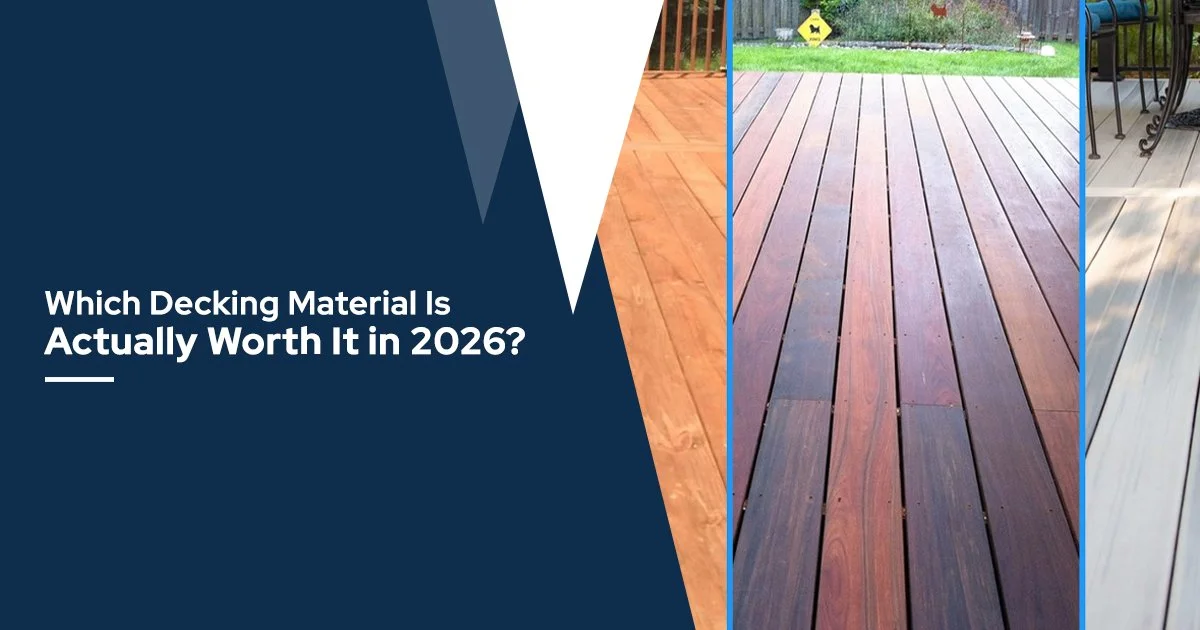
Most people who get this decision wrong don't realize it for two or three years.
That's the thing about decking. You build it, you enjoy it through the first summer, you get a few compliments from neighbors. And then the second summer arrives and there are splinters at the back door. The third summer, you're spending a June weekend on your knees with a stain brush instead of sitting on the deck you built to relax on.
By the time you're replacing boards — or worse, replacing the whole thing — the math has shifted dramatically against you.
At Hall Brothers Lumber in Union, MO, we've been in this conversation since 1938.
We've watched Missouri homeowners make every version of this decision across Franklin County, Jefferson County, Gasconade County, and greater St. Louis. We've seen what holds up and what quietly falls apart. And we've noticed that the homeowners who get it right almost always say the same thing: I wish someone had just told me the honest version upfront.
This is the honest version.
Why Does Decking Material Matter More in Missouri Than in Other States?
Missouri's climate is unusually hard on outdoor wood — hot, humid summers followed by hard freezes create exactly the conditions that accelerate rot, warping, and splinter damage.
Missouri isn't a mild climate. Union and the surrounding Franklin County area routinely sees summer humidity above 80%, heat indexes over 100°F, and then a genuine freeze season that stresses any material with moisture in it. That freeze-thaw cycle — water absorbed into wood during a wet fall, then freezing and expanding when January hits — is one of the fastest ways to crack and split boards.
What works fine for a deck in San Diego or Phoenix doesn't hold up the same way here. The benchmarks change when your material has to survive 95°F humidity in August and a hard freeze in February every single year.
This is why we have strong opinions about material selection in this region. And why the answer isn't the same for every homeowner — it depends on what you're willing to do, how long you plan to be in the house, and what your actual Saturday mornings are worth.
The trade-off that surprises people most isn't about cost. It's about something else entirely — and we'll get to that.
Is Wood Decking Still Worth It in 2026 — or Is It a Trap?
High-quality wood is genuinely beautiful and worth it if you're committed to annual maintenance. Cheaper wood in Missouri's climate is almost always a mistake you'll pay for within five years.
Wood decking has been the default for generations, and for good reason. A well-built cedar or redwood deck has a warmth and character that no engineered material fully replicates. The texture underfoot, the way it ages in a specific and honest way — there's a reason people still choose it.
But here's what wood requires in Missouri specifically: a real maintenance commitment.
Cedar and redwood carry natural oils that resist rot and insects. That resistance is real — but it's not permanent. Without regular sealing and staining, those oils deplete and the wood opens up to Missouri's humidity. Most industry guidance recommends staining or sealing annually in climates like ours. In practice, we've found that even every two years leaves boards visibly more vulnerable by year three or four.
Pressure-treated pine is the budget wood option. It handles rot and insects better than untreated wood, and it's the most affordable starting point. The tradeoff: it warps more, it's prone to surface checking, and it needs just as much maintenance as cedar if you want it to look presentable after the first few seasons.
The real risk with wood in Missouri isn't that it fails dramatically. It's that it degrades slowly and invisibly until one spring you realize the problem is bigger than a stain job can solve.
If you love wood and are genuinely willing to maintain it — bring that conversation to us. We carry quality lumber stock and can talk through what grade and species makes sense for your specific project. But if you're honest that weekends aren't going to include deck maintenance, keep reading — because the next material completely changes the calculation.
What Is Bamboo Decking and Is It Actually Better Than Wood?
Engineered bamboo is harder and more moisture-resistant than most wood species — but it's a middle-ground option with real advantages and real limitations that most homeowners don't hear about.
Bamboo decking is one of the least understood options at the lumber counter. People either dismiss it as exotic or assume it's essentially the same as wood. Neither is quite right.
Engineered bamboo boards are made from compressed bamboo fibers heat-treated under pressure — a process that produces a board that's genuinely denser and harder than many traditional wood species. Quality bamboo resists warping and moisture absorption better than pine or cedar. The grain is consistent and smooth, and it installs using the same basic process as hardwood decking.
In humid climates — which describes Missouri — bamboo's moisture resistance is a real advantage. It doesn't soak and swell the way softwood does. Water tends to bead and drain rather than penetrating the surface.
The honest limitations: bamboo can be sensitive at the cut ends. Exposed cuts must be sealed properly or moisture enters at those points. Some bamboo boards — particularly lower-quality imported products — can fade unevenly or show edge splitting within a few years. The quality range in bamboo is genuinely wide, and the difference between a premium product and a budget one isn't always obvious from a photo.
It also sits in a middle price range that makes the value proposition tricky. You're paying more than pressure-treated wood but typically less than premium composite — and getting a performance profile that's genuinely good but not quite at composite's level for zero-maintenance longevity.
Bamboo is a legitimate choice for the homeowner who wants something better than wood without going fully into composite territory. But the material that most Missouri homeowners end up choosing — especially after doing this comparison honestly — is the one we haven't covered yet.
Why Are More Missouri Homeowners Choosing Composite Decking Over Everything Else?
Because in Missouri's climate, composite decking's zero-maintenance durability over 20–30 years usually wins the total-cost-of-ownership comparison decisively — even though it costs more upfront.
Composite decking has transformed the decking market over the last decade. Modern composite boards are made from wood fiber and recycled plastic — a combination that produces a board that doesn't rot, doesn't splinter, resists insects, and holds its color and surface finish for decades.
The headline benefit is simple: you don't maintain it. No annual staining. No sealing. No replacing boards that split after a hard winter. A composite deck in Union, MO gets swept off and hosed down. That's the maintenance program.
The surface coating technology on premium boards has advanced dramatically. Capped composite boards — where the wood-fiber core is fully encased in a protective polymer shell — are significantly more resistant to staining, scratching, and moisture penetration than first-generation composites from 15 years ago. Most major brands carry 20–30 year warranties on fade and stain resistance.
What Missouri homeowners need to know specifically: composite handles our freeze-thaw cycle extremely well. Because composite doesn't absorb moisture the way wood does, it doesn't experience the expansion-contraction damage that cracks and splits wood boards over successive winters. It handles Missouri's summer heat respectably too — modern formulations have addressed the early-generation heat retention problems, though darker colors in direct sun will always hold more warmth than lighter wood tones.
The honest limitations: composite costs more per board than wood. It's heavier, so your framing needs to handle it. Cheap off-brand composite exists and performs poorly — if you're going composite, the brand and warranty matter. And composite doesn't look exactly like wood up close. It looks like composite, which most people find perfectly attractive but some genuine wood-lovers find less satisfying.
We went deep on why this shift is happening across Missouri in our post on the composite decking shift — worth reading if you want the full picture on what's driving homeowner decisions right now.
But here's the thing most comparison guides skip entirely — the real decision isn't just about material. It's about which type of homeowner you are. And that framework is what actually makes the right choice obvious.
Wood vs. Bamboo vs. Composite: The Honest Side-by-Side Comparison
| Wood (Cedar/Pine) | Bamboo | Composite | |
|---|---|---|---|
| Durability in Missouri climate | Moderate — requires maintenance | Good — moisture resistant | Excellent — freeze-thaw resistant |
| Maintenance required | Annual staining/sealing | Occasional sealing at cuts | Rinse and sweep only |
| Upfront cost | Lowest (pine) / Medium (cedar) | Medium | Medium-High |
| 10-year total cost | Higher (maintenance + repairs) | Medium | Lower (minimal upkeep) |
| Lifespan with proper care | 15–20 years | 20+ years | 25–30 years |
| Appearance | Warm, natural, ages visibly | Consistent, smooth grain | Consistent, wide color range |
| Missouri suitability | Requires effort to maintain | Good, watch edge sealing | Best overall for this climate |
| Warranty | None standard | Varies by brand | 20–30 years (major brands) |
How Do You Decide Which Decking Material Is Right for Your Home?
The real question isn't which material is "best." It's which material is best for how you actually live.
Here's the framework we walk homeowners through at Hall Brothers:
Choose wood if: You genuinely love natural wood, you're willing to do annual maintenance, you have a shorter planning horizon (5–10 years in the home), and quality hardwood is in your budget. The key word is "willing" — not "planning to" or "probably will." If you're honest with yourself that maintenance will slip, wood isn't the right choice for Missouri.
Choose bamboo if: You want a natural-looking material that outperforms standard wood in moisture resistance, you're willing to seal cut ends properly, and you want a middle option between wood's maintenance demands and composite's price point. It's a legitimate choice — just buy quality.
Choose composite if: You want a deck that performs beautifully for 25+ years without annual maintenance. If your priority is enjoying the outdoor space rather than working on it. If you're planning to stay in the home long-term and the total cost of ownership matters more than upfront price. And if Missouri weather extremes are a primary concern.
For most Franklin County homeowners planning to stay in their home for 10 or more years, composite wins the honest math. That's not a sales pitch — it's what the numbers consistently show when you run the comparison over time.
The next step is coming in to see the materials in person. Because samples answer questions that no comparison guide can.
Real Missouri Homeowner Scenarios
The weekend warrior who got honest with himself: A homeowner in Washington, MO built a cedar deck in 2018. By 2022, between work and kids' schedules, the staining was happening every other year at best. By 2024, two boards needed replacing. He came to us and rebuilt with capped composite. His summary: "I should have done this the first time, but at least now I don't have to think about it."
The new build outside Union: A couple building a new home in Gasconade County chose composite for their back deck and cedar for their pergola. The wood gives visual warmth overhead where weathering shows character; the composite floor takes the foot traffic and Missouri rain without demanding anything back. Mixing materials for different functions is smart — and entirely valid.
The bamboo experiment in St. Clair: A homeowner who wanted a wood-look deck without full wood maintenance chose a quality bamboo product. Three summers in — no warping, no staining needed, holds its look well. The one lesson: she sealed the cut ends on installation day as the contractor instructed, and she attributes the board condition directly to that.
FAQ: Decking Materials in Missouri
How long does composite decking actually last in Missouri?
Quality capped composite from major brands carries 25–30 year warranties on fade and stain resistance, and the boards themselves typically outlast the warranty when properly installed with correct spacing and ventilation. Missouri's freeze-thaw cycle, which stresses wood significantly, has minimal impact on composite because it doesn't absorb moisture.
Does composite decking get too hot to walk on in Missouri summers?
Modern capped composite boards are formulated to minimize heat retention, though darker colors in direct afternoon sun will always be warmer than lighter ones. Lighter gray and tan tones in composite perform significantly better in summer than dark browns or charcoals. This is worth considering during color selection if your deck faces west.
Is pressure-treated wood a good choice for a Missouri deck?
Pressure-treated lumber is the most affordable starting point and handles rot and insect resistance better than untreated wood. For the substructure — joists, beams, posts — pressure-treated is the right choice regardless of what you put on top. As a deck surface material in Missouri, it warps more and requires more maintenance than cedar or composite. It's a budget entry point, not a long-term performance choice.
What does bamboo decking cost compared to wood and composite?
Bamboo decking typically falls in the middle range — higher per board than pressure-treated pine, lower than premium composite. When you factor in maintenance costs over 10 years, quality bamboo and mid-range composite often land in a similar range. Come into Hall Brothers to see current pricing on what we have in stock.
How do I know if I'm buying quality composite or off-brand product?
Look for capped composite boards — the full cap, not just a partial coating — from brands with documented 20+ year warranties and a real track record. Ask your supplier what's backing the warranty and whether they carry replacement stock in that product line. Cheap composite looks similar in the store and underperforms quickly in the field. At Hall Brothers, we carry products we'd put on our own decks.
Do I need different joist spacing for composite or bamboo versus wood?
Yes, often. Most composite and bamboo products have specific span requirements that differ from standard wood framing. Some require closer joist spacing to prevent flex in the finished deck surface. Always check the manufacturer's installation specs before framing — changing the frame after the fact is an expensive correction.
Where can I see deck material samples in Franklin County, Missouri?
Hall Brothers Lumber in Union, MO carries decking and railing samples you can hold and compare in person. There's genuinely no substitute for seeing color and texture options side by side in good light. We're here Monday–Friday and can walk you through the comparison specific to your project. Check our decking and railing page for what we currently stock, or call us at (636) 583-2114.
Ready to Make the Call?
The homeowners who end up happiest about their decking choice are almost always the ones who spent 20 minutes with samples in their hands before deciding.
Not scrolling through photos. Not reading reviews. Actually holding the boards, seeing the colors in real light, asking the questions that don't fit in a guide.
That's what we're here for. Hall Brothers Lumber has been serving Missouri homeowners since 1938 — from Union and Washington to St. Clair, Sullivan, Pacific, and across Franklin County. Bring your dimensions, bring your questions, and we'll help you figure out which material makes sense for how you actually live.
📞 (636) 583-2114
🌐 See our decking and railing options →
🏠 View the gallery →
📍 Union, MO — Serving Franklin, Jefferson, and Gasconade Counties
Hall Brothers Lumber — 87 years of knowing what works in Missouri.