
Interior Paint Color Trends for 2026: What Missouri Homeowners Are Painting This Year
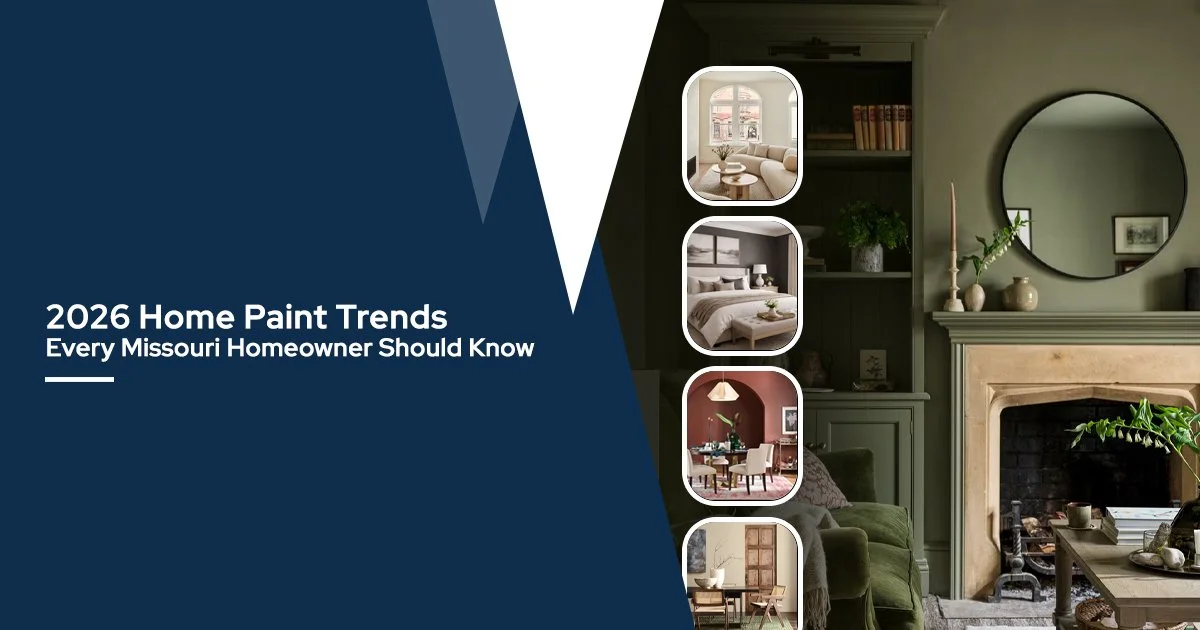
The fastest way to change how your home feels doesn't involve a contractor, a demo day, or a significant budget.
It involves a roller, a Saturday, and the right color on the wall.
Interior paint is the home improvement with the best ratio of effort to impact — and in 2026, the major paint brands have landed on a direction that's genuinely different from the past few years. Out: the cool grays and bright whites that dominated the last decade. In: warmth, earthiness, depth, and colors that make a room feel like it was designed rather than defaulted to.
At Hall Brothers Lumber in Union, we carry paint and finishing supplies for Franklin County homeowners taking on projects exactly like this — from a single accent wall to a full interior refresh. Here's what the 2026 trends actually look like, what they mean for your home, and how to execute them correctly once you've chosen your direction.
What Are the Major 2026 Paint Colors of the Year — and What Do They Have in Common?
Every major paint brand's 2026 Color of the Year selection reflects the same underlying direction: a shift away from stark, cool neutrals toward warm, grounded, nature-inspired tones that make rooms feel intentional and lived-in rather than clinical and cautious.
The individual picks tell the story clearly:
Pantone: Cloud Dancer — an airy, soft off-white that brings a sense of calm, clarity, and openness to any space. This isn't your builder-grade stark white — it's a warmer, slightly luminous white that reads as intentional rather than default. It's the color that makes trim and natural wood accents pop without competing with them.
Benjamin Moore: Silhouette AF-655 — a deep, moody blue-gray that anchors a carefully curated palette of enchanting pales, handsome midtones, and grounded deep shades. This is the bold pick of the year — a color confident enough to command a full room or a dramatic accent wall. It pairs beautifully with crisp whites, natural wood, and lighter neutral tones as a commanding focal point.
Valspar: Warm Eucalyptus — a muted, restorative green designed to bring comfort, calm, and connection to nature. Soft enough to work as a full-room color, distinctive enough to read as a deliberate design choice rather than a safe fallback.
Glidden: Warm Mahogany — a warm terracotta red with an uplifting feel that works beautifully as a full color drench or used only on woodwork for a subtler effect. The boldest pick of the year — not for the faint-hearted, but stunning in the right application.
HGTV Home by Sherwin-Williams: Universal Khaki — a true khaki that becomes a foundation for incredible design, pairing naturally with stone, wood, and natural materials while allowing furniture and accents to deliver personality.
The through-line across all of them: warm, nurturing, naturally grounded tones that reflect a broader shift toward warmer, more grounded interiors in 2026. If your home is currently painted in cool gray, blue-gray, or stark white — this year's trends are a direct invitation to reconsider.
What Is Replacing Cool Gray and Stark White in Missouri Homes in 2026?
Cool gray — the dominant interior color of the 2010s — is being replaced by warm sandy neutrals, soft off-whites with pink or taupe undertones, and earthy greens that feel organic rather than calculated. Stark white is giving way to what designers are calling "frothy" whites and putty tones that make rooms breathe.
This transition is the biggest practical shift for Missouri homeowners doing interior refreshes in 2026.
We are officially saying goodbye to stark white and welcoming frothy whites and putty tones that pair beautifully with natural wood — neutral interior paint colors designed to make a room exhale.
For Franklin County homes — particularly older homes with natural wood trim, hardwood floors, and traditional architectural details — this shift is particularly well-suited. The warm undertones in 2026's neutral palette work with the natural wood tones that cool grays often fought against. A room that felt slightly disconnected with cool gray walls can come alive with a warm sandy neutral or a soft warm white that lets the wood do what it was always trying to do.
Warmer neutrals with soft pink and warm taupe undertones are becoming the preferred backdrop for earthy greens and soft ochres — which means the trend isn't just about wall color in isolation. It's about how the wall color works with the room's existing materials and furnishings.
For Missouri homeowners who have been living with cool gray for a decade and wondering why it never quite felt right — this is the year to make the change.
Which 2026 Paint Trends Work Best for Different Rooms in Your Home?
The 2026 palette breaks naturally into room-appropriate categories: warm whites and soft neutrals for living spaces and bedrooms, nature-inspired greens for kitchens and bathrooms, deep moody tones for accent walls and entryways, and warm earthy reds for spaces where drama is welcome.
Matching the right trend to the right room is where good choices become great results.
Living rooms and open spaces. Warm neutrals — Universal Khaki, warm putty tones, sandy beiges — work beautifully in larger living spaces because they read differently across the day as light changes. A living room painted in a warm sandy neutral with natural wood furniture and woven textiles is the quintessential 2026 interior. Pair neutral walls with stone and wood elements that let the connection to the outdoors shine through sculptural moments of décor.
Bedrooms. Cloud Dancer — Pantone's soft off-white — is the ideal bedroom choice for homeowners who want a restful, airy feel without committing to a stark or cold white. Warm Eucalyptus works beautifully as a full bedroom color for a more nature-immersed effect. A growing desire for calm and connection to nature makes nature-inspired hues particularly popular for spaces meant for rest.
Kitchens and bathrooms. These are where the bolder 2026 picks earn their place. Dark cabinetry in a deep tone like Silhouette against lighter countertops and backsplashes lends timeless drama to kitchens and baths. Warm Mahogany applied to a kitchen island or bathroom vanity against neutral walls is the kind of move that photographs beautifully and ages well.
Entryways and accent walls. The entry is where first impressions form and where bold color has the most impact with the least risk — you're not committing a full room to a strong choice. Use a deep shade for a commanding focal wall, then soften the surrounding space with lighter tones. An entryway in Silhouette or Warm Mahogany tells visitors immediately that someone made a deliberate design choice in this house.
Trim and woodwork. Create contrast with crisp whites and natural wood on trim, doors, and millwork — the 2026 trend specifically embraces contrast between wall color and woodwork rather than matching everything to a single neutral.
What Are the Most Important DIY Interior Painting Tips for Missouri Homeowners?
The difference between a paint job that looks professional and one that looks homemade almost always comes down to preparation — cleaning, patching, and priming before a single drop of finish coat is applied.
This is the step that gets skipped most often and causes the most regret.
Surface preparation. Wipe walls down with a mild detergent solution to remove dust, grease, and cooking residue — particularly important in kitchens and dining rooms where airborne oils accumulate invisibly over years. Fill nail holes and cracks with spackling compound, let it dry completely, and sand smooth before priming. A patched wall that hasn't been sanded flush will show through paint as a shadow even after two coats.
Priming matters most for dramatic color changes. Going from a cool gray to a warm earthy neutral — or to a deep color like Silhouette — requires a proper primer coat to achieve full, even coverage in two finish coats rather than three or four. A tinted primer, matched close to the finish coat color, is the professional approach: it reduces the number of finish coats needed and produces more even color saturation. For Missouri homeowners making the shift from years of cool gray to 2026's warmer palette, this step is particularly important.
Thin coats beat thick coats every time. Two thin, even coats produce a smoother, more durable finish than one heavy application. Thick coats drip, sag, and take longer to dry. Apply the first coat, let it dry completely — typically two to four hours depending on humidity and temperature — and assess before applying the second.
Missouri climate considerations. Light is the most critical factor in how a color looks — a warm white that appears creamy in a well-lit showroom may read differently in a north-facing room. Missouri's variable light — bright summer light versus flat winter light — means testing paint in the actual room at multiple times of day before committing to gallons. Most paint suppliers carry sample sizes for exactly this purpose. Apply a generous swatch directly on the wall — not a piece of paper — and observe it in morning light, afternoon light, and lamp light before making a final decision.
Sheen selection. Eggshell or satin finishes for walls — they're washable and have enough sheen to clean easily without being as reflective as semi-gloss. Semi-gloss for trim, doors, and cabinets — it highlights architectural detail and withstands scrubbing. Flat or matte finishes for ceilings — they hide imperfections better than any other sheen.
What Tools Do You Actually Need for a Quality Interior Paint Job?
A quality interior paint job requires a high-density roller for walls, an angled sash brush for cutting in at edges and trim, painter's tape, drop cloths, and a paint tray — investing in decent versions of each tool produces measurably better results than the cheapest options.
The tools matter more than most DIYers acknowledge — and not in the direction of buying the most expensive equipment available. The goal is quality at each category, not luxury.
Rollers. A 3/8-inch nap roller cover for smooth walls produces the best finish on interior drywall. Cheap roller covers shed fibers into the paint film and leave texture. A quality roller cover loads paint evenly and releases it without stippling. For ceiling work, a 1/2-inch nap handles the texture of most residential ceilings better than a shorter nap.
Brushes. A 2.5-inch angled sash brush is the workhorse of interior cutting in — along ceiling lines, at trim, around outlets and switches, and anywhere the roller can't reach cleanly. A quality synthetic bristle brush holds more paint, releases it more evenly, and produces a cleaner cut line than a cheap brush with splayed or uneven bristles.
Painter's tape. Press it down firmly along the entire edge — a tape that isn't fully adhered will bleed paint underneath and produce a ragged line. Remove tape while the paint is still slightly tacky — not fully dry — pulling it back at a 45-degree angle to avoid peeling the finish coat with it.
Drop cloths. Canvas drop cloths protect floors better than plastic sheeting — they absorb drips rather than letting them spread when walked on, and they stay flat rather than bunching and creating trip hazards. For ladder work at ceiling height, a canvas drop cloth directly under the work area is non-negotiable.
Hall Brothers carries painting supplies through our Do it Best partnership — stop in and we'll help you build the right materials list for your specific project. Visit our store or call us at (636) 583-2114.
How Do You Make a Bold 2026 Color Choice Work Without Regretting It?
Start with an accent wall rather than a full room commitment when trying a bold 2026 color like Silhouette or Warm Mahogany — an accent wall requires less paint, produces a significant visual impact, and can be repainted if the color doesn't work as expected in the space.
This is the practical advice that separates homeowners who confidently experiment with color from those who play it safe forever.
The accent wall approach works particularly well with 2026's bold picks. A commanding focal wall in a deep tone with surrounding lighter tones creates the palette layering that 2026 design is specifically embracing — you're not going against the trend by not painting all four walls in a dark color. The trend is explicitly built around contrast.
One gallon of paint covers approximately 350–400 square feet. A standard 12×12 accent wall is roughly 100 square feet — well within a single gallon. The cost of testing a bold choice in a single accent wall is minimal. The downside of committing to four walls of a color that doesn't work in the room's light conditions is significant.
Sample, test, observe at multiple times of day, then commit. This sequence takes an extra week but prevents the much more expensive and time-consuming process of repainting.
FAQ: Interior Paint Trends and DIY Painting in Missouri
What is the 2026 Color of the Year from the major paint brands?
Each major brand selected its own: Pantone chose Cloud Dancer, a soft warm off-white. Benjamin Moore selected Silhouette AF-655, a deep blue-gray. Valspar chose Warm Eucalyptus, a muted restorative green. Glidden selected Warm Mahogany, a warm terracotta red. HGTV Home by Sherwin-Williams chose Universal Khaki, an earthy sandy neutral. Across all picks, the consistent direction is warm, nurturing, naturally grounded tones — a clear shift away from the cool neutrals that dominated the previous decade.
Is cool gray still a good choice for interior walls in 2026?
Cool gray is still a functional, neutral choice — it's not wrong. But it's no longer the design-forward choice it was five years ago. Warmer neutrals with soft pink and warm taupe undertones are becoming the preferred backdrop for 2026 interiors, and cool gray can feel slightly dated against the warmer wood tones and natural materials that 2026 design is embracing. If you're repainting anyway, a warm neutral is a more current direction.
How many coats of paint does a typical interior wall need?
Two coats of quality paint over a properly primed surface is standard for most color applications. Dramatic color changes — particularly going from a dark color to a light one or from cool gray to a warm earthy tone — benefit from a tinted primer coat before the two finish coats. Very deep colors like Silhouette may benefit from a third finish coat for full saturation. Quality paint and proper primer application reduce the number of coats needed.
What paint finish should I use on interior walls versus trim?
Eggshell or satin for walls — washable, durable, with enough sheen to clean without being reflective. Semi-gloss for trim, doors, and cabinets — it highlights architectural detail and stands up to repeated cleaning and contact. Flat or matte for ceilings — it hides imperfections and doesn't create reflective glare. Avoid flat finish on walls in high-traffic areas like hallways and kitchens where cleaning is frequent.
Does Hall Brothers Lumber carry interior paint and painting supplies?
Yes. Through our Do it Best partnership, Hall Brothers carries paint and finishing supplies for interior and exterior projects. Come in with your project details and we'll help you find the right products. Our store page has address and hours. Call us at (636) 583-2114 with any questions before your visit.
When is the best time of year to paint interior walls in Missouri?
Interior painting can be done year-round in Missouri since it's not weather-dependent the way exterior painting is. Spring and fall are popular because you can open windows for ventilation without extreme heat or cold affecting drying times. Avoid painting in very high humidity — Missouri summers can have ambient humidity high enough to extend drying times and affect paint adhesion. A dehumidifier running in the space helps during humid months.
The Fastest Way to Update Your Home Is Already at the Hardware Store
A gallon of paint. A quality roller. A Saturday morning.
The 2026 color palette gives Franklin County homeowners more interesting choices than any year in recent memory — warm eucalyptus greens, earthy sandy neutrals, dramatic deep blue-grays, and soft off-whites that feel intentional rather than accidental.
Hall Brothers Lumber in Union has been supplying Franklin County home improvement projects since 1938. Stop in, tell us what you're working on, and we'll help you get it right.
📞 (636) 583-2114
🌐 hallbroslumber.com
📍 Union, MO — serving Franklin, Jefferson, and Gasconade Counties
Hall Brothers Lumber — 88 years of knowing what works in Missouri.